The model is the easy part. Choosing one, connecting it and testing it are hard work, but they are work teams know how to plan. What decides the return comes after: whether people use the system every day, and whether the old way of working stops.
The research points the same way. About 70% of the challenges in AI programmes are people and process issues, not algorithms or technology[1].
A system can work and still return nothing. If the team keeps its old spreadsheet next to the new tool, or checks every output twice because it does not trust it, the hours stay where they were. The licence and the build are paid for, and the saving never arrives. Usage can peak in the launch week and then fall while the old way is still within reach.
So plan adoption the way you plan integration: as work with an owner, a date and a measure. Six habits make the difference.
Design with the people who do the work
The people who do the work every day, in a contact centre, a finance team or a field crew, know where the time goes, which exceptions matter, and which steps exist only out of habit. Bringing them into the design gives you a better system, and a team that already knows it before go-live. Ask them to walk you through a real case from start to finish, and time it. That walk-through is often the most honest baseline you will get.
Change the process, then the tool
Automation pays off when steps disappear. Before launch, decide which approvals, handoffs and forms go away, and write the new process down. Then switch the old path off on a set date. While both paths stay open, most people keep using the one they know.
Make problems easy to report
In the first weeks, users will find cases the design missed. Give them one simple way to flag a problem, and show them that flags get fixed. A team that sees its feedback acted on keeps using the system. A team that feels ignored goes back to the spreadsheet. Share what was fixed each week, even the small things. It tells people the channel works.
Train by role
Executives need to know what to expect and how to read the results. Daily users need to know what the system does, where it can be wrong, and what to do when it is. One general session rarely covers both. Train close to go-live, on the live system, with real cases. Training weeks ahead on a demo is mostly forgotten by launch day.
Measure against the starting point
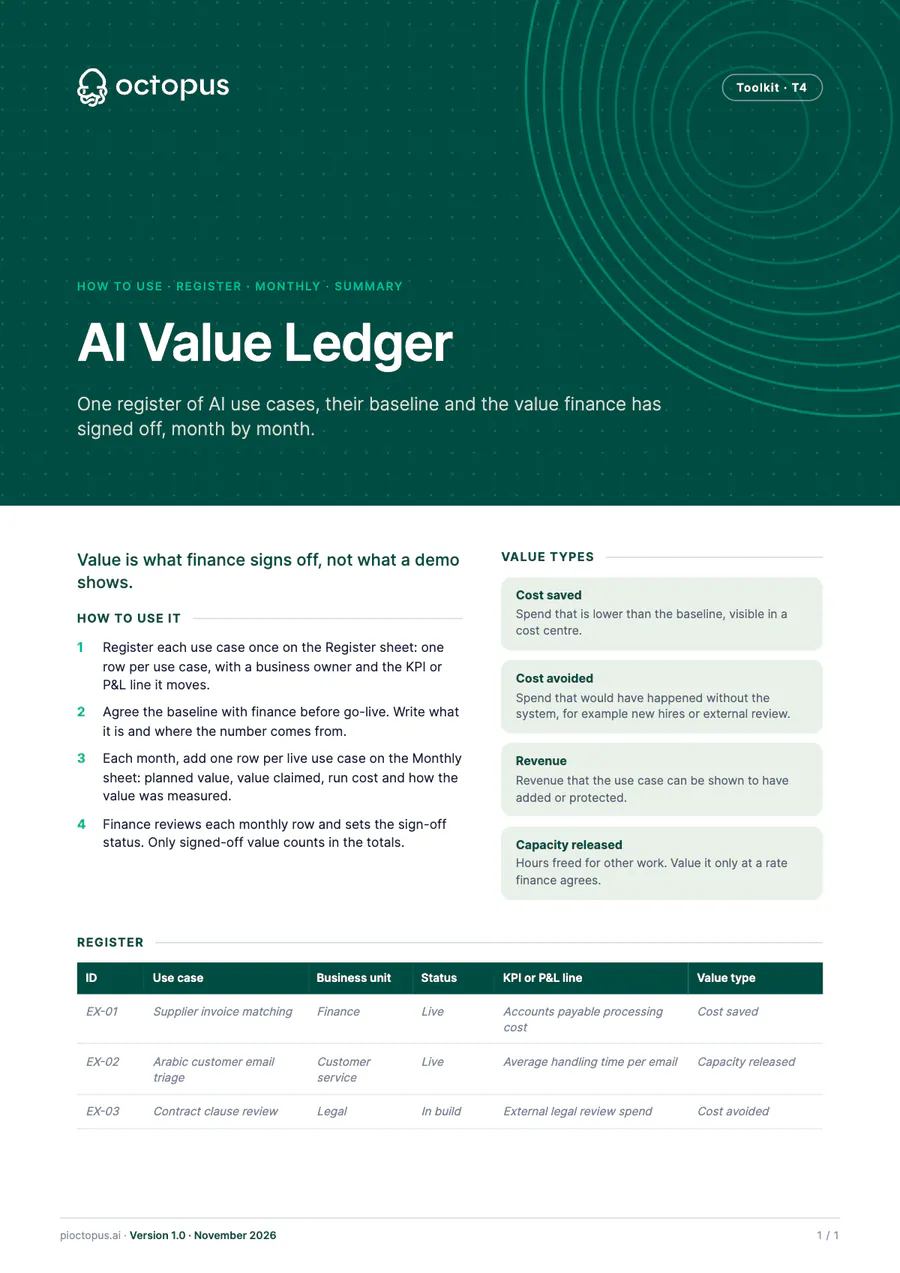
Agree on the baseline before the build: hours, cycle time, error rates or cost. Report against it after go-live, and keep reporting. Ask finance to sign off the number. A clear figure that finance accepts is what keeps support for the next system. If the number moves the wrong way, say so early. A frank report keeps more trust than a late one.
Value is what finance signs off, not what a demo shows.
Give the freed time a purpose
When the routine load drops, say in advance where the time goes: harder cases, faster service, work that needs judgment. Teams adopt faster when they see the change as better work rather than fewer people. Write it into the plan, and name the manager who will redirect the hours.
When the system runs on the tools people already use, and the freed hours are planned before launch, the team spends its time where its experience counts. That is where the return shows up.
Treat adoption as part of the build, not a training session at the end. The first system that people use every day does more than save hours. It shows the organisation what a live system looks like, and that makes the next decision easier to take.
Planning adoption this way is the work of our practice in AI operating model, workforce and adoption. Measuring the return is part of our practice in AI strategy, investment and value realisation.
Sources (1)
Figures are quoted as published. Forecasts and drafts are labelled.